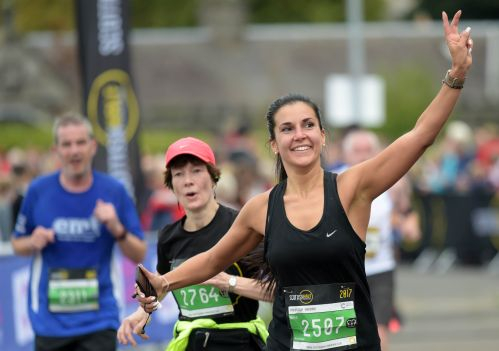
The Scottish 10K is a fast, well-organised road race that shares much of its route and character with the Scottish Half Marathon. Designed to be accessible yet competitive, the event attracts runners of all abilities who are looking for a scenic, efficient, and rewarding 10K experience.
Held alongside the half marathon, the Scottish 10K benefits from the same favourable course design and professional event management, making it a popular choice for runners seeking strong performances.
Overview of the Scottish 10K
Taking place in late summer, the Scottish 10K offers an excellent opportunity to race in warmer conditions without the congestion often found in city-centre events. The race appeals to both newer runners and experienced athletes looking for a fast, no-nonsense course.
Organisation is a key strength, with clear signage, well-managed start areas, and supportive volunteers contributing to a smooth race-day experience.
The Scottish 10K Course Explained
The Scottish 10K typically follows a point-to-point route similar to the opening section of the half marathon. The course is predominantly flat with a gentle net downhill profile that encourages steady pacing and efficient running.
Early kilometres are wide and open, allowing runners to settle into rhythm quickly. The favourable gradient can make these opening stages feel easy, increasing the importance of pacing discipline.
As the race continues, runners move through quieter roads with minimal elevation change. These middle kilometres are ideal for maintaining consistent effort and focus.
The final section approaches the finish in Musselburgh, where crowd support increases and provides a welcome boost of motivation. The overall course design makes it well suited to even pacing and strong finishes.
Weather Conditions and Environmental Factors
Weather conditions for the Scottish 10K are similar to those of the half marathon. Late-summer temperatures are usually mild to warm, with wind being the most significant variable.
Exposure on open roads means headwinds can affect effort, particularly in the latter stages. Rain is possible but rarely severe.
Choosing lightweight, breathable clothing and planning hydration appropriately helps runners remain comfortable throughout the race.
Training and Preparation for the Scottish 10K
Most runners can prepare effectively for the Scottish 10K with an eight to ten-week training plan. The focus should be on balancing endurance with speed.
Easy runs build aerobic fitness, while tempo runs help runners sustain effort at or near race pace. Interval training improves speed and efficiency, making race pace feel more manageable.
A weekly longer run of 7–9 miles builds confidence and ensures endurance is not a limiting factor, particularly for runners stepping up from shorter distances.
Strength training supports good running form and reduces injury risk.
Race-Day Strategy and Execution
A controlled start is key to success in the Scottish 10K. Allowing pace to build gradually helps avoid early fatigue and ensures a strong finish.
Maintaining focus during quieter sections of the course can be challenging, but breaking the race into smaller segments helps manage effort and motivation.
In the final kilometres, committing to effort and drawing energy from nearby runners often leads to the most satisfying finishes.
Why the Scottish 10K Is a Strong Choice
The Scottish 10K offers a fast, scenic, and well-organised race experience that suits runners of all abilities. Its efficient course, supportive environment, and late-summer timing make it an excellent option for personal best attempts or enjoyable end-of-season racing.