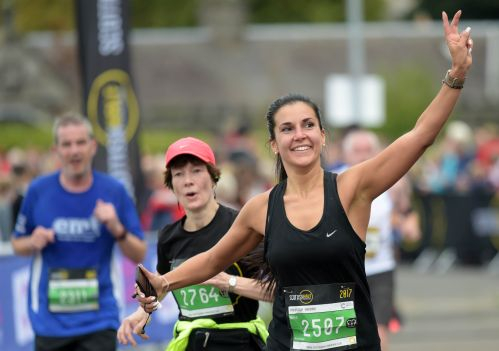
The Scottish 10K offers runners a fast East Lothian course and a memorable finish along the final furlong at Musselburgh Racecourse.
For participants, the event may last less than an hour. Some will be chasing a personal best, while others will be completing their first organised 10K or raising money for a cause that matters deeply to them.
Behind that relatively short race is a much longer operational effort. Months of planning are required to secure roads, arrange transport, recruit volunteers, position medical resources and transform Musselburgh Racecourse into a start-and-finish venue.
The Scottish 10K also opens an event day that includes the Scottish Half Marathon. This means it cannot be planned or delivered in isolation. Roads, finish systems, volunteers and supplies must support two separate races with different start locations, distances and timetables.
Planning Two Events as One Programme
The Scottish 10K and Scottish Half Marathon are distinct races, but their operations are closely connected. The 10K begins earlier and uses infrastructure around Musselburgh Racecourse. Later in the morning, the half marathon starts from Meadowmill Sports Centre and follows a longer route through East Lothian before reaching the same finish venue. Road closures need to support both events. A road cannot necessarily reopen once the 10K field has passed if it is required for the approaching half marathon. Volunteer shifts may span both races, with some people moving between positions. Medical teams must preserve sufficient resources for the longer event after responding to incidents during the 10K. Finish supplies such as medals, water and nutrition are allocated carefully. The first race cannot be allowed to use stock reserved for later participants. Timing systems need separate event configurations and participant databases. Baggage and number services also require clear instructions so runners enter the correct process. The timetable includes transition periods, but significant delays can affect the entire programme. Race control continually evaluates the relationship between the two events.
Designing a Fast and Clear 10K Course
A fast course needs more than flat roads. Runners also require clear directions, adequate width and a surface free from avoidable hazards. Course planners examine every junction, turn and crossing. They identify areas where the field may remain tightly packed and where faster runners are likely to overtake. Road widths and street furniture influence where barriers and cones should be placed. Spectator areas need to remain separate from the racing line. The route is measured precisely, establishing the correct position for the start, kilometre markers and finish. Emergency access is considered throughout. Medical teams need ways to reach incidents even when roads are closed and filled with participants. The course plan also records marshal positions, hydration facilities, toilets and traffic-management infrastructure. Even when the same broad route has been used before, it is checked again. Temporary roadworks, damaged surfaces or changes in local access could require operational adjustments.
Months of Work Before Race Morning
The event team begins by securing permissions and coordinating with East Lothian Council, emergency services, transport providers and Musselburgh Racecourse. Traffic-management specialists develop closure and diversion plans. These specify when barriers are installed, which streets are affected and how roads will reopen. Residents and businesses need advance notice. Parking suspensions, access arrangements and expected timings are communicated before event weekend. Volunteer coordinators calculate how many people are required and what experience or training each role needs. The medical provider creates a deployment plan based on participant numbers, weather, course geography and previous event data. Equipment is ordered and scheduled for delivery. This includes barriers, toilets, timing mats, radios, signage, tables, water, medals and waste containers. Every element has a dependency. Timing equipment cannot be tested until it is installed, while course signage cannot be completed before traffic teams secure the roads. The final event plan brings those separate activities into one coordinated schedule.
Transforming Musselburgh Racecourse
Musselburgh Racecourse provides an impressive sporting setting, but it must be adapted for thousands of runners and spectators. Before participants arrive, teams install the start pens, timing equipment, barriers, toilets, baggage facilities and information points. The start and finish require different flows. Runners gathering before the race must not conflict with finish infrastructure or spectators. Emergency routes are protected throughout the venue. An ambulance or medical team must be able to move even when the public areas are busiest. Timing technicians test the start and finish mats, cameras and communications links. Backup systems reduce the risk of losing results if a component fails. Volunteers receive briefings and move to their assigned positions. Some guide participants towards the start, while others prepare medals and refreshments for the finish. Public-address systems provide instructions about starting pens, baggage and race timing. As the field assembles, staff monitor crowd density. Participants are released in a controlled sequence, allowing the course ahead to absorb the runners safely.
Building and Checking the Course
Course setup begins before most runners wake. Traffic-management crews install road-closure barriers, diversion signs and parking restrictions according to approved plans. The course team adds directional arrows, cones, kilometre markers and participant information. Every turn is inspected. A sign facing the wrong way or hidden behind street furniture could confuse runners moving at speed. The team checks the surface for hazards such as broken glass, standing water, debris or damaged road sections. Problems are removed where possible. If they cannot be fixed immediately, the area may be marked, protected or reported for further action. Hydration facilities receive water, tables and waste containers. Volunteers need enough time to organise supplies before runners arrive. Medical access points are checked once closures are in place. A route that was available during planning may be obstructed by an unexpected vehicle or piece of infrastructure. Sector managers report readiness to race control. The race does not begin simply because the start time has arrived; the route must first be confirmed as secure.
The Volunteers Along the Route
Volunteers translate the operational plan into a visible and supportive event. At Musselburgh Racecourse, they answer questions, direct runners towards pens and help resolve problems with baggage or race numbers. Course marshals stand at junctions, turns and pedestrian crossings. They provide clear directions while watching for hazards or unauthorised access. Their briefings explain exactly where runners will approach from and which roads or paths need to remain clear. A marshal cannot allow someone to cross simply because there appears to be a gap. Participants may be approaching quickly or overtaking outside the expected line. Volunteers also form an observation network. They may be the first to notice a runner who appears unwell, a barrier that has shifted or a vehicle attempting to enter the course. Reports need to include the precise location and a factual description. Race control can then coordinate the appropriate response. At hydration points, volunteers prepare for a concentrated wave of participants. Cups or bottles must be offered without stepping into the racing line. Discarded containers are collected continuously because they can create a slip hazard. Finish volunteers distribute medals and refreshments while keeping runners moving through the recovery area.
Medical Planning for a High-Intensity Race
A 10K is shorter than a half marathon, but that does not make medical planning optional or simple. Competitive participants may be running close to their maximum effort. First-time runners may be unfamiliar with pacing or how their bodies respond under race conditions. The medical plan prepares for falls, muscle injuries, dehydration, breathing difficulties and serious cardiac incidents. Resources are positioned according to course geography and expected runner density. Fixed treatment points may be supported by mobile responders. Road closures can make access more difficult. Protected routes are identified so medical vehicles can reach different sections. Marshals reporting an incident give the assigned position, nearby road or junction and visible symptoms. Race control dispatches the nearest suitable resource and tracks which medical teams remain available. At the finish, clinicians monitor runners who have stopped after a high-intensity effort. Someone may cross the line independently but become dizzy, confused or unwell moments later. Volunteers are trained to request help rather than assuming a participant only needs rest. Medical teams also need to preserve readiness for the Scottish Half Marathon later in the day. After every incident, race control reviews remaining coverage.
Race Control: Seeing the Whole Operation
Race control receives information from the start, course sectors, medical teams, traffic managers, transport coordinators and finish venue. The team tracks the leading runners, main field and final participants. Because the 10K can move quickly, finish staff need early warning when the leaders approach Musselburgh Racecourse. The final participant’s location is equally important. Course teams and volunteers remain in position until the sweep operation confirms that a section is clear. If a member of the public enters the route, a barrier fails or a medical incident affects runner flow, race control coordinates the response. Radio messages use agreed call signs and location references. Clear communication prevents delays and misunderstandings. Race control also monitors the wider event timetable. A delay during the 10K may affect half-marathon road plans, volunteer shifts or finish preparation. Significant actions are recorded, creating an accurate timeline for the post-event review.
Timing Every Runner Accurately
Every participant wears a timing device linked to their race number. Start mats record when each person crosses the line, while finish mats calculate their completion time. Intermediate equipment may provide additional data. Timing technicians install, protect and test the system before the start. Cables must not create trip hazards or remain vulnerable to weather and vehicles. Backup systems and finish cameras provide additional evidence if the primary data contains an anomaly. The 10K and half marathon require separate event configurations. Technicians ensure that participants are assigned to the correct race and that later timing activity does not overwrite earlier results. Timing data also helps operations staff understand how the field is moving. It can confirm when large groups are approaching the finish or when the final runners pass a particular point. After the event, missing or unusual results are investigated using information from several sources.
Protecting Residents and Local Access
The Scottish 10K affects roads and communities that continue to function beyond the event. Residents need advance information about closures, parking restrictions and expected reopening times. Businesses may require revised delivery arrangements. Bus operators need diversion details and enough time to brief drivers. On race morning, marshals protect the route while responding respectfully to people affected by restrictions. Parking is a particularly important issue. A car blocking a driveway is frustrating, but one obstructing a pavement, bus route or emergency access can create a serious safety problem. Wheelchair users and families with buggies need pavements to remain clear. Event buses and ambulances require sufficient road width. Enforcement teams and marshals monitor restricted areas. Vehicles causing an obstruction may be fined or removed. The event’s ability to return depends partly on maintaining the trust and cooperation of the local community.
Delivering the Racecourse Finish
The final furlong at Musselburgh Racecourse is the event’s defining moment. Runners enter the venue knowing the finish is close, while spectators create a concentrated wall of sound. Behind that experience is a carefully designed finish system. Timing mats, cameras, barriers and signage are installed and checked. The finishing line needs enough width for runners arriving together. Participants must continue moving after crossing. Stopping to check a watch or wait for a friend could cause a collision with runners behind. Volunteers guide finishers towards medals, hydration and refreshments. Each area is positioned in sequence. If one station becomes congested, the queue could extend backwards towards the line. Medical staff have protected access to the finish and recovery areas. Spectators remain outside the controlled funnel and meet runners later in a designated reunion space. Baggage facilities are positioned so participants can retrieve their belongings without blocking the finish exit.
Resetting for the Scottish Half Marathon
As Scottish 10K participants celebrate, event teams begin preparing for the next race. Finish supplies are counted and replenished. Waste is removed, and timing systems are reset for the half-marathon field. Medical teams review any incidents from the 10K and confirm which resources are available. Volunteers take scheduled breaks or move to new positions. Those changes must happen without leaving critical areas unsupported. Race control changes focus from a compact 10K field to a point-to-point half marathon spread across East Lothian. Transport coordinators monitor buses delivering half-marathon participants to Meadowmill and bringing spectators towards Musselburgh. Any issue from the first race must be resolved quickly. A damaged barrier, depleted supply or technical fault cannot simply be carried into the next event. This turnaround period is one of the busiest parts of the day, even if it appears calm to spectators.
The Sweep and Course-Clearance Operation
The sweep team follows the final official participants and reports their position to race control. Marshals, medical coverage and hydration support remain in place until the relevant section is cleared. Course crews then begin collecting signs, cones, bottles and temporary equipment. However, sections required for the half marathon may remain closed. The traffic plan distinguishes between areas that can reopen and those still needed later. Roads are inspected before traffic returns. A discarded bottle, loose cable tie or forgotten sign can create a hazard. Traffic-management teams remove barriers in an approved order. Opening the wrong junction too early could direct vehicles towards runners or event workers. Volunteers remain at their positions until a supervisor confirms they can leave.
The Work After the Finish Line Closes
Even after both races end, the operation continues.Timing results are checked, medical records completed and lost property logged. Radios, volunteer equipment and unused supplies are returned. Baggage teams reconcile unclaimed items. Contractors remove toilets, barriers, signs and technical installations. Waste teams inspect the racecourse and roads. Hired equipment is counted and prepared for collection. Transport staff remain on duty until the final scheduled buses leave. The venue and course are formally handed back only when they are safe and clear.
Learning From the Event
A post-event review examines the full operation rather than focusing only on runner feedback. Timing data shows how the field moved through the course. Medical reports reveal where incidents occurred and whether resources were positioned effectively. Transport information helps organisers understand how people arrived and departed. Volunteer feedback can expose repeated confusion at a crossing or practical problems at a hydration station. Residents, businesses and council partners may identify issues with communication or access. Every observation is considered against safety, cost and operational practicality. Even a successful race generates changes for the following year.
The Human Effort Behind 10 Kilometres
A participant may spend less than an hour on the Scottish 10K course. Some members of the event team will have been working since before dawn and remain long into the afternoon. Their roles range from checking timing cables and loading water to managing a road closure or helping a nervous first-time runner find the correct pen. None of those tasks alone delivers the race. Together, they create the conditions in which thousands of people can pursue individual goals safely. The Scottish 10K succeeds when runners can concentrate on their pace, the East Lothian course and the final furlong at Musselburgh. That focus is possible because the operations team has already considered the roads, transport, weather, medicine, baggage and contingencies on their behalf. Behind every medal is a network of people whose work began before the start line appeared and continued after the final runner went home.